I park badly in the main street which is Nayland. I regret this almost instantly when a large double decker bus hoves into view and makes hardwork of navigating the narrow main road with cars parked randomly on either side. Regret it, but do nothing about it, I could have tried to cram the car 4 inches closer to the curb but I will take my chances. Odds are I will scrape the tyre walls and bust the hubcaps on old fashioned high curbs. It only represents a problem to the reckless, they will slow down to a legal limit or hit it.
A recent very expensive redevelopment of my local village saw the removal of fine old high curbs. All old curbstones come from Dartmoor in my imagination and so the removal of them breaks an imaginary link with my favourite locale. .
The old town planners knew what they were doing though as everytime it rains now the shops on one side all flood as water pours over the new low profile curbs. The developers have trousered the EU grant and are long gone, tearing up someone else's high street having pulled the wool over the local council eyes, or more likely crossed their palms with silver. Now the few pedestrians that did care if they were in the road or on the pavement are no longer sure. Be dangerous if the road system was able to allow people to do the legal speed limit but a gridlocked crawl between expensive and pointless traffic lights is all that is allowed..
Thanks for nothing and back to the walk.
Dogs and I have to cross the Roman Road which is now a multi-lane A road. On the other side sits a large converted barn, now some swish commerical enterprise. Traffic was light, we were soon across, that makes a pleasant change.
This bit of the walk starts with a new wooden kissing gate, a renewal and promise of a future. It is good too see things are cared about. A bit of string marginally too short is used to fasten the gate. It makes securing it difficult, but the last person through had made the effort. It is a good start.
An electric fence seperates the walker from the empty field. This was actually a theme of the walk, a lot of low cost fencing, electrified, or barbed wire. The dogs were off the leads and free to wander. Sometimes they might get more than 12 feet from me, but its rare and not encouraged. They are not strangers to leads, nor are they slaves.
Almost instantly I met an elderly woman with a young outlook walking a young dog who was as old as the hills. The dogs name was Reggie. We soon put rural England in it's place (high), "Nowhere else like in on Earth, look a the wind blowing in the willows". I did as told and was rewarded by seeing a little bit of the world as this lady saw it.
Having agreed on it really being a green and pleasant land we chat as dog owners do. I am not sure what the dogs are saying, but it involves a lot of arse sniffing. The walk is going to cover 16km and within the first 50 yards I will have seen 33% of the humanity I am going too. I get about 3 words out of the other 67%.
It never ceases to amaze just how few people you bump into once more than 400 yards from a road. I met none on a beautiful weekend on footpaths linking Suffolk villages.
Oddly the conversation with the woman had turned to religion. While the dragon tale and the OS map were the starting point, the wonderful
Ronald Blythe was the living spirit of the landscape for me. Born 1922, a man whose faith is meaningful and informed. He has written many a book about where I walk because it is where he has spent a lifetime walking. His book Word from Wormingford is in my bag as I stroll.
Mr Blythe is the companion in my head as we walk. He has walked every step I will walk, many times.
Dogs and I left to our own devices, we are surrounded by the noises of industrious nature going about its business. Streaks of blue, long sleek elongated bodies zoom by. They look faster than they are, the common blue damselfly, well named. Water is nearby.
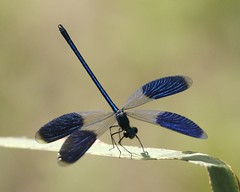
Then a gathering of banded demoiselle flap around us almost impossibly fragile, how do they manage?
Butterflies are in profusion enjoying blackberry bushes by the look of it. Red Admirals are putting on quite a show, my favourite from childhood. The Painted lady, last years wonder, are not to be seen. I cannot help but miss them.
The first glimpse of the slow moving River Stour through trees. I take a well used track to the waters edge. Willow dips low and trails in the water, it literally brings the landscape to life. Water is also magical for the caveman ancestor within us all. Every cell in our body knows it needs water, it is a basic joy.
The River Stour runs in the valley, which is to say this landscape is not flat. It is surprisingly lumpy, in places positively corrugated. The views across this wide valley are fabulous. Winding my way through a field of ripening wheat I can look across a patchwork of fields and associated buildings. Although harvesting has started in my neck of the woods it seems not to have begun here yet.
The church tower at Nayland, is in plain view and will be even when I reach the turning point of the walk in 5 miles time. The church towers remain the tallest buildings in the landscape, commerce does not loom over faith here.
At Wissington, which according to a text is called Wiston by the locals showing a preference to its ancient name, I bump into my first moat as well as small Norman church.

Essex and Suffolk are the English counties with the most moats. Hundreds of them each. Until I read
Roger Deakin, Waterlog, my idea of a moat was the thing around a castle. Not so. It became quite the status symbol and would appear around farmsteads or simply barns. They need not be defensive as a good many did not encircle the property. They fulfilled a variety of functions.
If you are interested here is a link to Channel 4s Time Team mini site about moats
In the mid-1600’s a number of families left Wissington and took their Puritan beliefs to the New World and the
Massachusetts Bay Colony.
Religion seems alive in the landscape. I have remained immune to any organised religion but rather like malaria, just coz I don't have it, doesn't mean it doesn't exist.
My path turns towards Little Horkesley but turns off before I reach this interesting little village. Another day for that. I am heading towards Bottengoms. We walk through a plantation of widely spaced but obviously regimented willow trees, some marked, presumably for felling. Others are saplings just beginning their journey.
In my mind all willow trees are destined to be cricket bats, it's a noble calling. So I don't know enough about willow trees, this much is clear..
Bottengoms is a house nestled in the surrounding countryside. So nestled its near invisible, hidden by the rolling landscape. Horses are in paddocks nearby as I look down upon it.
Bottengoms is ancient and I believe still without mains water. It was the home of
John Nash from the late 1920's, the artist of international reputation. Now it is the home of Ronald Blythe having been bequeathed it on the death of his friend Nash in 1977. So I walk the land Mr Nash new so well and painted so wonderfully. I walk the land Mr Blythe writes about so lovingly.
I wonder what the war artist Nash would have made of the barbed wire which encloses fields nearby and hereabouts. My guess, not much.
What an enchanted spot, a nice place to stay for a while.
Part 3 coming soon enough.